
Area Details
Dubai Harbour
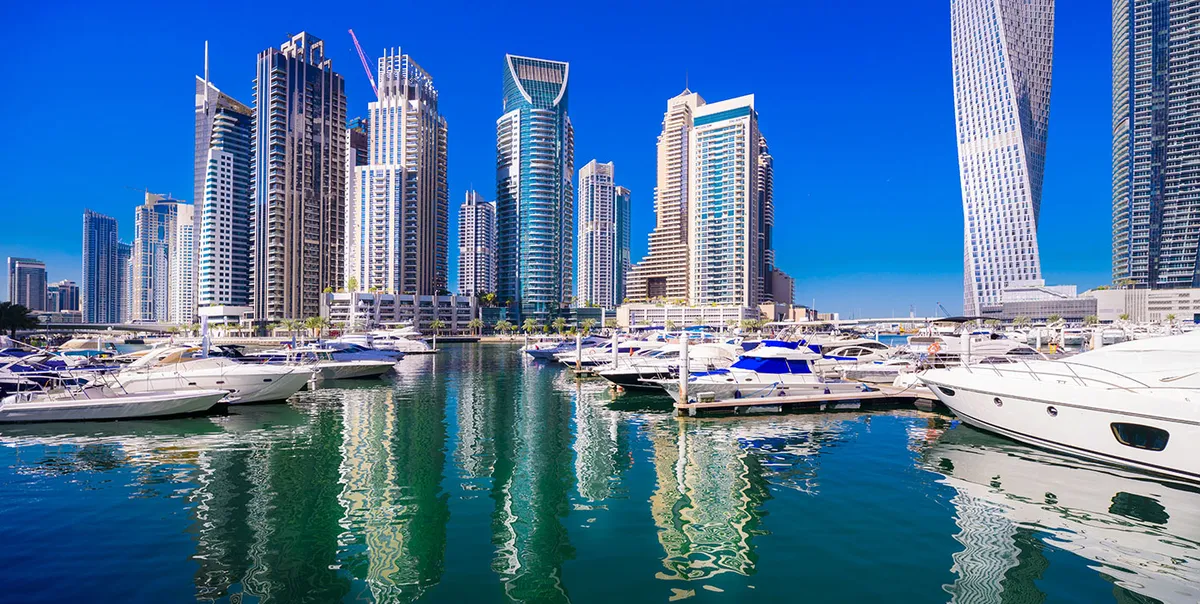
Dubai Harbour is one of Dubai’s coastal and maritime districts and is worth considering for apartment buyers, particularly those who prioritise waterfront living, modern towers, and access to destinations in west Dubai. The area’s identity is shaped mainly by apartment towers, the marina setting, the waterfront environment, maritime access, and proximity to Dubai Marina. Dubai’s official tourism sources also position Dubai Harbour as a marine and leisure destination. From a property-decision perspective, Dubai Harbour should be viewed as an apartment-led market rather than a fully diversified neighbourhood with broad villa, office, and everyday-use components. The cleaned transaction data used for this guide shows that a reliable benchmark can be displayed only for apartments. For that reason, the pricing analysis in this article focuses on apartments, and no market conclusion is provided for villas or offices.
Dubai Harbour
Dubai Harbour is one of Dubai’s coastal and maritime districts and is worth considering for apartment buyers, particularly those who prioritise waterfront living, modern towers, and access to destinations in west Dubai. The area’s identity is shaped mainly by apartment towers, the marina setting, the waterfront environment, maritime access, and proximity to Dubai Marina. Dubai’s official tourism sources also position Dubai Harbour as a marine and leisure destination. From a property-decision perspective, Dubai Harbour should be viewed as an apartment-led market rather than a fully diversified neighbourhood with broad villa, office, and everyday-use components. The cleaned transaction data used for this guide shows that a reliable benchmark can be displayed only for apartments. For that reason, the pricing analysis in this article focuses on apartments, and no market conclusion is provided for villas or offices.
Snapshot
Short Overview
Dubai Harbour is one of Dubai’s coastal and maritime districts and is worth considering for apartment buyers, particularly those who prioritise waterfront living, modern towers, and access to destinations in west Dubai. The area’s identity is shaped mainly by apartment towers, the marina setting, the waterfront environment, maritime access, and proximity to Dubai Marina. Dubai’s official tourism sources also position Dubai Harbour as a marine and leisure destination.
From a property-decision perspective, Dubai Harbour should be viewed as an apartment-led market rather than a fully diversified neighbourhood with broad villa, office, and everyday-use components. The cleaned transaction data used for this guide shows that a reliable benchmark can be displayed only for apartments. For that reason, the pricing analysis in this article focuses on apartments, and no market conclusion is provided for villas or offices.
Full Guide
About Dubai Harbour
Overall Area Identity
Dubai Harbour is more appealing to buyers who value high-rise units, water views, proximity to the beach, leisure amenities, and access to well-known districts in west Dubai. The area sits along one of Dubai’s active coastal stretches and, from a lifestyle perspective, is more closely aligned with buyers who prefer modern apartment living over low-rise or more family-oriented residential fabrics.
The important point is that Dubai Harbour still needs to be assessed at the project and building level. Tower management quality, service charges, handover status, unit view, floor level, internal layout, tenancy status, and daily access can create a significant difference between two units that may appear similar at first glance.
Location and Access
Dubai Harbour is located in west Dubai, close to Dubai Marina. Its road access depends on the surrounding coastal roads and routes connected to Sheikh Zayed Road. For buyers with a daily commute, checking actual travel times during peak hours is important, because the residential experience in coastal districts often depends on the quality of entry and exit routes.
In terms of road infrastructure, Dubai’s Roads and Transport Authority has introduced a project to improve access into and out of Dubai Harbour. According to the official announcement in June 2026, the project includes a 1,500-metre bridge with two lanes in each direction and was reported to be 90% complete at that time. Before making a final buying or living decision, the final operational status of the project and its practical effect on daily routes should be reviewed separately.
From a public-transport perspective, Dubai Harbour should not be interpreted in the same way as districts with direct metro connectivity. For buyers who rely on the metro or car-light commuting, comparison with areas that have closer rail access is necessary. Property Finder has also noted in its area guide that there is no metro station inside Dubai Harbour.
Lifestyle and Daily Experience
Daily life in Dubai Harbour is shaped mainly by waterfront living, residential towers, coastal walks, leisure spaces, cafés, restaurants, and proximity to recognised nearby destinations. This lifestyle is better suited to buyers who are interested in a modern coastal urban environment and want to live in a district with a maritime identity.
For families, the decision is slightly different. The absence of a school within the district itself, or the lack of complete walkable services for every daily need, can be an important consideration. In this scenario, school routes, commute time, nearby healthcare services, supermarkets, parking, entry and exit security, usable open space, and building management should be reviewed. KHDA is the official reference for reviewing private schools in Dubai, but for Dubai Harbour, no firm education claim should be made without a school-by-school review.
Property Profile and Asset Type
In the data for this period, Dubai Harbour is a fully apartment-led district. In the valid cleaned transactions, there was no reliable sample for villas or offices. This directly affects the type of decision being made: buyers should not draw conclusions about villas or offices from apartment rates, and investors should also benchmark their comparison against the apartment market.
In residential supply, 3,624 completed units and 5,769 units under construction were identified for Dubai Harbour. The fact that the number of units under construction is higher than the completed stock shows that the area is still in an active development phase. This is not positive or negative by itself; however, it makes handover timing, construction stage, developer quality, the likelihood of timely delivery, future density, and the completion of surrounding amenities more important in the decision-making process.
Secondary-Market Benchmark
In this guide, the benchmark means the median price of secondary-market transactions. For Dubai Harbour, the benchmark can be displayed only for apartments, because the valid secondary-market sample for apartments is sufficient. No general benchmark is provided for villas or offices.
| Property Type | Median Size | Median Total Price — Secondary Market | Secondary-Market Rate | Median Total Price — Primary Market | Primary-Market Rate |
| Apartment | 1,394 sq ft | AED 4,045,600 | AED 3,684/sq ft | AED 8,534,227 | AED 4,689/sq ft |
| 1-Bedroom Apartment | 827 sq ft | AED 2,700,000 | AED 3,438/sq ft | AED 4,720,208 | AED 4,086/sq ft |
| 2-Bedroom Apartment | 1,589 sq ft | AED 4,775,000 | AED 3,722/sq ft | AED 8,336,085 | AED 4,612/sq ft |
| 3-Bedroom Apartment | 2,233 sq ft | AED 7,500,000 | AED 3,924/sq ft | AED 15,442,926 | AED 4,955/sq ft |
This table is a starting point for comparison, not a substitute for reviewing a specific unit. The difference between primary and secondary pricing may relate to factors such as the project, handover timing, payment plan, view, floor level, size, amenity quality, title status, building services, and sale conditions. Therefore, the area figure should be interpreted together with the details of the building and the individual unit.
Residential Occupancy
The latest usable residential occupancy rate for Dubai Harbour in the reviewed data is 70.2% for H2 2025. This figure should be interpreted in light of the area’s development stage. In a district with a significant number of units under construction, occupancy can change as projects are completed, units are handed over, residents move in, and surrounding services become more established.
For investors, residential occupancy is only an initial signal. Actual rental appeal should be assessed at the building level, taking into account unit type, view, furnishing quality, service charges, current tenancy status, and the demand profile of target tenants.
Supply, Development, and Urban Context
Dubai Harbour forms part of Dubai’s broader development of coastal districts and urban destinations. At the citywide level, the Dubai 2040 Urban Master Plan emphasises quality of life, improved urban structure, better use of space, and more balanced urban development; however, this framework should not be interpreted as a guarantee of price growth or investment outcome for any specific area or project.
For Dubai Harbour, the practical implication of development is that buyers should look at both the current condition and the future completion stage. A unit that is attractive today because of its view, access, and quietness may be affected in the future by surrounding construction, changes in density, or the completion of infrastructure. Conversely, better access and completed services may make the residential experience more usable for some residents.
Which Buyers Should Consider Dubai Harbour?
Dubai Harbour is better suited to buyers who value modern apartments, coastal living, water views, newer buildings, and access to destinations in west Dubai. For those looking for a family villa, a low-rise neighbourhood, an in-district school, or direct public-transport connectivity, the area requires more careful comparison with other options.
For investors, Dubai Harbour is worth considering when the entry price, project type, handover timing, rental appeal, service charges, and holding horizon are aligned. The area name alone is not enough for a decision. In the market for coastal apartments, differences between projects, floor levels, views, and building-management quality can have a greater effect than the area average.
Advantages
The advantages worth reviewing in Dubai Harbour include its coastal identity, focus on modern apartments, proximity to Dubai Marina, access to leisure spaces, and improving infrastructure projects. The presence of a sufficient secondary-market transaction sample for apartments also allows buyers to make a clearer initial comparison.
For end users, the main appeal of the area lies in the experience of waterfront living and newer buildings. For investors, the area is more relevant when the selected unit aligns with the purchase objective in terms of entry price, building quality, rental appeal, and liquidity.
Considerations
The most important consideration for Dubai Harbour is that the market analysis in this guide is limited to apartments. There is not enough data for villas or offices, and the apartment table should not be used to draw conclusions about other asset types.
The second consideration is the significant volume of properties under construction. This can create room for comparison between primary and secondary options, but it also requires careful review of handover timing, execution quality, and the possibility of changes around the unit.
The third consideration is access. The Dubai Harbour road project may be important for entry into and exit from the area, but a decision to live or invest should be based on the actual route status, commuting hours, and the buyer’s daily needs.
Homeland Advisory View
Homeland’s advisory view is that Dubai Harbour should be assessed comparatively. The area is worth considering for some coastal-apartment buyers, but it is not the same answer for every buyer. Budget, purchase objective, holding horizon, family needs, tolerance for surrounding construction, car dependency, and lifestyle preference should be reviewed alongside transaction data.
For a more precise decision, Dubai Harbour should be compared with nearby apartment-led and coastal options. In this comparison, price per square foot is not the only factor that matters; building quality, service charges, tenancy status, handover stage, unit view, access, everyday amenities, and liquidity should also be considered together.
Frequently Asked Questions
Is buying property in Dubai Harbour suitable for every buyer?
No. Dubai Harbour is more relevant for buyers who are considering a coastal apartment, modern towers, and a waterfront lifestyle. For families who need schools, parks, everyday services, and direct public transport, comparison with more complete districts is necessary.
How should the secondary-market benchmark in Dubai Harbour be interpreted?
The apartment benchmark in this review is AED 3,684 per square foot. This figure is the median price of secondary-market transactions and should be reviewed together with the project, floor level, view, building quality, tenancy status, service charges, and the buyer’s objective.
Is Dubai Harbour mainly an apartment market?
In the data used for this guide, Dubai Harbour is an apartment-led market. There was not enough sample depth for a general villa or office analysis; therefore, pricing conclusions are provided only for apartments.
How can Dubai Harbour be considered from an investment perspective?
For investors, Dubai Harbour is worth considering when the entry price, rental appeal, service charges, handover status, project quality, and holding horizon are aligned. A decision should not be based only on the area name or average pricing.
What should be reviewed before buying an apartment in Dubai Harbour?
Key items include building quality, unit view, floor level, internal layout, service charges, title status, current tenancy, handover timing, daily access route, parking, and the surrounding construction environment.
Is the absence of a metro station inside Dubai Harbour an important consideration?
Yes, for buyers who are not car-dependent or who rely on public transport for their daily commute. The absence of a metro station inside the district should be assessed alongside alternative routes, taxis, buses, and the distance to nearby stations.
For a more precise decision, compare Dubai Harbour with nearby coastal districts and established apartment-led options in west Dubai. Homeland can review the differences between these options in terms of budget, lifestyle, building quality, access, and transaction data.