
جزئیات منطقه
Bur Dubai
Bur Dubai is one of Dubai's oldest and most established districts, located on the western side of Dubai Creek. The area has played an important role in shaping the city's commercial and historical identity. Today, it brings together residential neighbourhoods, commercial centres, traditional markets, office buildings and urban amenities. Unlike many of Dubai's newer districts, which have developed around large-scale projects and master-planned residential communities, understanding Bur Dubai requires a closer look at its urban character, streets, neighbourhoods and the differences between individual buildings. For those considering living, purchasing property or exploring investment opportunities in Bur Dubai, these distinctions are important. Proximity to public transport, building type, local amenities, parking availability and individual property features can all influence the living experience and a property's suitability for a buyer's objectives.
نمای کلی
خلاصه کوتاه
Bur Dubai is one of Dubai's oldest and most established districts, located on the western side of Dubai Creek. The area has played an important role in shaping the city's commercial and historical identity. Today, it brings together residential neighbourhoods, commercial centres, traditional markets, office buildings and urban amenities.
Unlike many of Dubai's newer districts, which have developed around large-scale projects and master-planned residential communities, understanding Bur Dubai requires a closer look at its urban character, streets, neighbourhoods and the differences between individual buildings.
For those considering living, purchasing property or exploring investment opportunities in Bur Dubai, these distinctions are important. Proximity to public transport, building type, local amenities, parking availability and individual property features can all influence the living experience and a property's suitability for a buyer's objectives.
راهنمای کامل
درباره Bur Dubai
Overview and Character of Bur Dubai
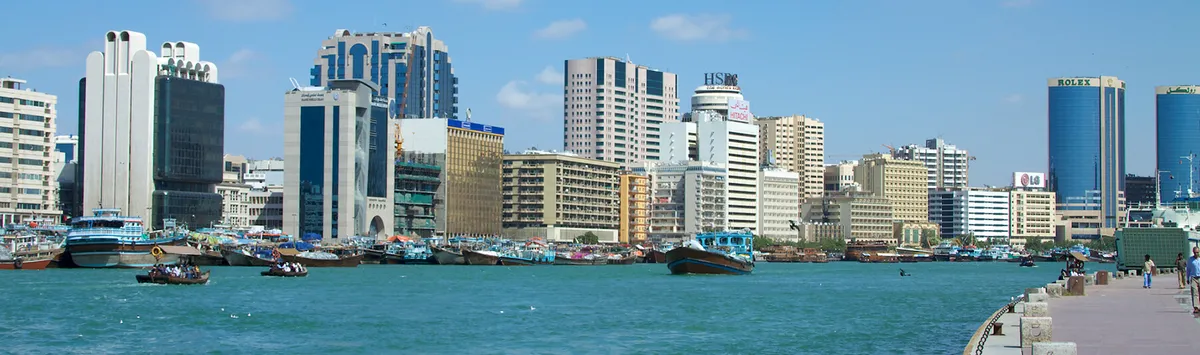
Bur Dubai stretches along Dubai Creek, opposite parts of Deira. Dubai Creek has played a significant role in the area's commercial history and urban development.
Within the historic parts of the district, traditional architecture, narrow passageways, internal courtyards and historic wind towers remain important features of the built environment. Alongside this heritage setting are residential and commercial buildings and busy urban streets.
This combination makes Bur Dubai more than a historical or tourist destination. It is also an active urban district where everyday living, business activities, local services and movement between different parts of the city come together.
Location and Connectivity
One of the important considerations when evaluating Bur Dubai is the range of transport options available.
Depending on their location, residents and visitors can use the Dubai Metro, buses, taxis, private vehicles and, in areas close to Dubai Creek, water transport services.
Metro and Public Transport
BurJuman Metro Station is an important interchange within Dubai's metro network, connecting the Red and Green Lines.
Other stations are located within the wider Bur Dubai area or its surrounding districts, including Al Ghubaiba, Oud Metha and Sharaf DG.
However, the presence of a metro station within a district does not necessarily mean that every residential building offers convenient walking access.
When selecting a property, buyers and residents should assess the actual distance to the nearest station, pedestrian routes and local accessibility conditions.
Road Connectivity
Bur Dubai's urban road network connects the district with other parts of the city. However, journey times vary depending on the starting point, selected route and traffic conditions.
When evaluating a property, it is advisable to consider actual daily commuting routes, particularly during working hours.
Water Transport
Traditional abra services crossing Dubai Creek are a distinctive feature of transport in the historic part of Bur Dubai.
These routes provide a water connection to Deira while also remaining part of Dubai's cultural identity and visitor experience.
Lifestyle in Bur Dubai
Living in Bur Dubai can offer a different experience from living in newer, gated residential communities.
In parts of the district, shops, restaurants, service providers and residential buildings are located close to one another.
This urban setting may appeal to residents who value convenient access to everyday services and an active city environment.
However, street activity, traffic, surrounding noise levels and parking availability can vary significantly between buildings.
A lifestyle assessment of Bur Dubai should therefore go beyond the district's name and consider the specific street, building and immediate surroundings of the property.
Shopping Centres, Markets and Everyday Amenities
BurJuman Mall
Shopping, dining and urban services.
Meena Bazaar
Retail outlets and a traditional commercial environment.
Al Seef
Waterfront walks, cafés and leisure spaces along Dubai Creek.
Textile Souk
A traditional market associated with Dubai's historic textile trade.
The combination of modern shopping centres and traditional markets is one of Bur Dubai's defining characteristics.
This mix provides access to everyday services while offering different types of shopping environments across the district.
Educational and Healthcare Facilities
Schools, healthcare centres, pharmacies and medical services operate within the wider Bur Dubai area and its surrounding districts.
For families considering a move to the area, the presence of schools is only one factor in the decision-making process.
Curriculum, admission availability, commuting routes, travel times and associated costs should also be assessed.
When considering healthcare facilities, the range of services provided, distance from the property and accessibility may influence the suitability of a residential location.
Cultural, Historical and Recreational Attractions
Al Fahidi Historical Neighbourhood
One of Dubai's notable heritage districts, recognised for its traditional architecture, wind towers and historic passageways.
Al Seef
A waterfront leisure and pedestrian destination along Dubai Creek, combining heritage-inspired architecture with contemporary amenities.
Dubai Creek Park
A waterfront green space offering opportunities for walking, family activities and outdoor recreation.
These destinations are also featured in official visitor information about Bur Dubai.
However, their proximity to a particular property should be assessed individually rather than assumed based on the property's district.
Property Types in Bur Dubai
Bur Dubai and its wider surrounding area contain apartment buildings, some villa properties, and commercial and office spaces.
Building age, design, facilities and location can vary considerably between available properties.
Residential Apartments
Apartments are among the property types that can be considered in Bur Dubai.
When comparing apartments, buyers should evaluate usable floor area, internal layout, building maintenance, lift access, parking facilities and service charges.
Two apartments with similar floor areas may offer different living conditions and ongoing maintenance costs.
Villas
Villa properties can also be found in certain parts of the wider Bur Dubai area.
However, the presence of villas should not be interpreted as evidence of extensive or evenly distributed villa supply across all neighbourhoods.
Land characteristics, building condition, ownership arrangements, permitted use and maintenance requirements should be reviewed when evaluating these properties.
Office Properties
The presence of commercial and service-related activities in Bur Dubai makes office space another relevant component of the district's real estate market.
When evaluating an office property, important considerations include the building's location, accessibility for employees and visitors, parking availability, building systems and the suitability of the premises for the intended business activity.
Property Prices and Transaction Benchmark Rates
Under Homeland's analytical methodology, the benchmark rate is defined as the median price per square foot of secondary market transactions.
This metric should be calculated separately for apartments, villas and offices.
In the current version, a benchmark rate for Bur Dubai as a whole is not provided because the statistical boundaries and transaction coverage have not yet been validated for final aggregation.
Price comparisons should also maintain a clear distinction between the primary and secondary markets.
A single transaction price or a small number of transactions does not provide a sufficient basis for drawing conclusions about an entire district.
Even after a reliable benchmark rate has been calculated, it should be treated as a starting point for further evaluation.
Building condition, floor level, views, tenancy status, service charges and the property's legal status should all be considered before making a final decision.
Property Supply and Urban Development
Analysing property supply can help identify the composition of completed buildings and properties under construction.
For residential properties, unit counts should be assessed using reliable property classifications and completion status.
For office properties, gross leasable area (GLA) is the relevant measure and should not be confused with residential unit counts.
For Bur Dubai, aggregated supply figures attributable to the entire district have not yet been validated.
Consequently, no conclusions are drawn about the overall level of supply or its potential effect on property prices.
Who Might Consider Bur Dubai?
Working Professionals and Public Transport Users
For individuals who prioritise proximity to metro services and everyday urban amenities, properties with convenient transport access may be worth considering.
Families
Access to educational facilities, healthcare services and everyday amenities can be relevant considerations for families.
However, the suitability of a particular location depends on the street, building, preferred school and individual household requirements.
Property Buyers and Investors
Bur Dubai may be included among the districts considered during a property search or investment assessment.
However, any investment decision should involve a comparison of verified transactions, ownership costs, tenancy conditions and individual property characteristics.
The currently available data is insufficient to support conclusions about investment returns across the district.
Advantages and Considerations
| Advantages | Considerations |
| Distinctive historical and urban character | Considerable variation in neighbourhood settings and building characteristics |
| Access to the metro network in parts of the district | Actual walking distance from the property to the nearest station should be assessed |
| Traditional markets and everyday amenities | Potential congestion and traffic on certain streets |
| A mix of residential and commercial environments | Differences in building facilities and maintenance standards |
| Access to cultural attractions and Dubai Creek | Parking availability and local traffic conditions require assessment |
These points describe characteristics of the district and matters worth considering. They should not be interpreted as a ranking of Bur Dubai against other areas.
Homeland's Advisory Perspective
When considering Bur Dubai, the decision-making process should begin with the actual needs of the buyer or prospective resident.
For residential purposes, everyday accessibility, building quality, available amenities and the surrounding environment are important considerations.
For investment-oriented purchases, transaction prices, ownership costs, tenancy conditions and comparisons with similar properties require careful assessment.
In both cases, an understanding of the district should be complemented by a detailed evaluation of the specific building and unit.
The district's name alone cannot determine a property's quality or suitability.
Frequently Asked Questions About Bur Dubai
Is Bur Dubai suitable for families?
Certain parts of Bur Dubai may be worth considering for families because of their access to educational facilities, healthcare services and everyday amenities.
However, the condition of the building, surrounding environment and daily commuting requirements should be assessed individually.
Does Bur Dubai have metro access?
Yes. Stations such as BurJuman play an important role in the area's transport network.
Actual metro accessibility depends on the location of the individual property.
What types of properties are available in Bur Dubai?
Residential apartments, some villas, and commercial and office spaces can be found within the wider district.
However, the precise composition of the property stock across Bur Dubai has not yet been validated using the currently available datasets.
How should secondary market benchmark rates in Bur Dubai be interpreted?
A benchmark rate represents the median price per square foot of valid secondary market transactions.
It should be calculated separately for each property type.
No validated benchmark rate for Bur Dubai as a whole is presented in this version.
Is buying property in Bur Dubai suitable for every buyer?
Not necessarily. A district cannot be assumed to suit all buyers equally.
Budget, purchase objectives, investment horizon, residential requirements and individual property characteristics should be assessed together.
Is Bur Dubai worth considering for property investment?
Bur Dubai can be included among the districts considered for further investment research.
However, without verified transaction data, ownership costs and tenancy information, conclusions about investment returns or overall investment attractiveness would not be sufficiently supported.
What should buyers check before purchasing property in Bur Dubai?
Key considerations include the property's legal status, building quality, service charges, parking arrangements, accessibility, tenancy status and prices of comparable transactions.