
جزئیات منطقه
Dubai Festival City (DFC)
Dubai Festival City is a mixed-use district in Dubai, located along Dubai Creek. It brings together residential, office, retail and leisure spaces within one urban destination. The area is worth considering for those who value convenient access to everyday amenities, recreational facilities and waterfront surroundings. However, choosing a property in Dubai Festival City requires a closer assessment beyond the area's general characteristics. Differences between buildings, property types, maintenance costs, ownership conditions and comparable transaction prices can all influence whether a particular property is suitable for personal use or investment. This guide explores Dubai Festival City's location, accessibility, lifestyle, amenities, property mix, residential and office supply, occupancy rates and key considerations for property buyers.
نمای کلی
خلاصه کوتاه
Dubai Festival City is a mixed-use district in Dubai, located along Dubai Creek. It brings together residential, office, retail and leisure spaces within one urban destination. The area is worth considering for those who value convenient access to everyday amenities, recreational facilities and waterfront surroundings.
However, choosing a property in Dubai Festival City requires a closer assessment beyond the area's general characteristics. Differences between buildings, property types, maintenance costs, ownership conditions and comparable transaction prices can all influence whether a particular property is suitable for personal use or investment.
This guide explores Dubai Festival City's location, accessibility, lifestyle, amenities, property mix, residential and office supply, occupancy rates and key considerations for property buyers.
راهنمای کامل
درباره Dubai Festival City (DFC)
Overview and Location
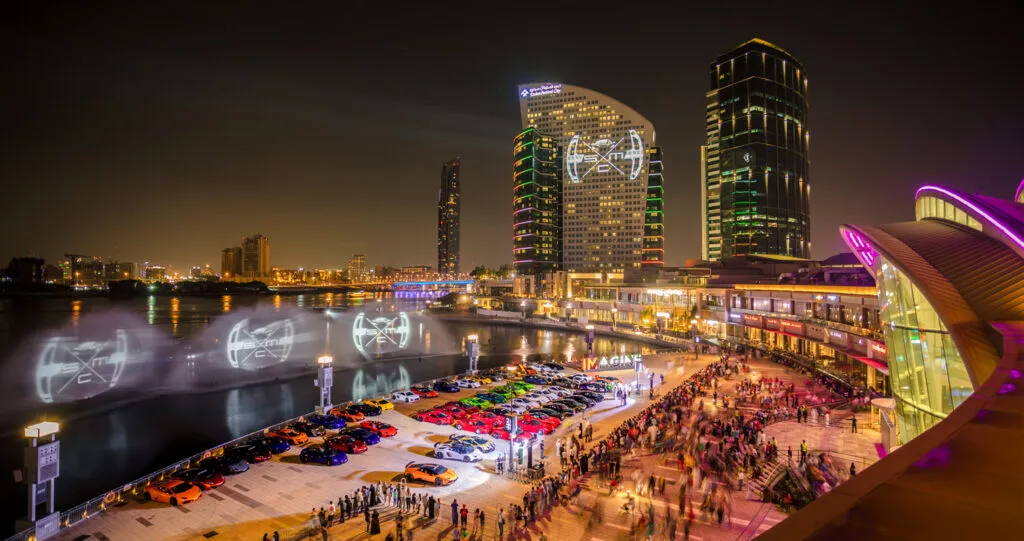
Dubai Festival City is situated along Dubai Creek and is known for its diverse mix of urban uses. One of its defining characteristics is the integration of residential communities with shopping destinations, everyday services, office buildings and leisure facilities.
Its waterfront setting contributes to the area's overall character. However, not all residential buildings or individual units offer direct water views, making it important to assess each property's exact location.
Dubai Festival City differs from predominantly residential neighbourhoods because of its combination of commercial, leisure and residential activities. This may appeal to some residents, while those seeking a particularly quiet, low-traffic environment should pay closer attention to the location of individual buildings.
Location, Accessibility and Transport
Access to Dubai's road network is an important consideration when evaluating Dubai Festival City. The district is connected to other parts of the city through surrounding roads and bridges near Dubai Creek.
For residents who rely on private vehicles, reviewing daily commuting routes to workplaces, schools and other destinations is essential. Geographical distance alone does not determine travel time, and traffic conditions can significantly influence the commuting experience.
Public Transport
Dubai Festival City does not have a dedicated metro station within the development. Access to the Dubai Metro therefore requires travelling to nearby stations using other modes of transport.
For buyers who prioritise daily metro use, the distance between their building and available public transport connections, as well as the number of transfers required, should be considered.
Similarly, the availability of public transport services in the wider area does not replace the need to check actual routes and journey schedules.
Lifestyle in Dubai Festival City
One of the area's notable characteristics is the availability of a variety of services and amenities within a relatively concentrated urban setting.
Shopping centres, restaurants, cafés, recreational facilities and waterfront spaces form part of the everyday lifestyle and leisure options available to residents.
This combination may appeal to people who prefer to carry out some of their shopping and social activities close to home.
Nevertheless, the living experience is not identical across Dubai Festival City. Buildings located near busier commercial destinations may differ from those in more residential sections in terms of traffic, noise levels and parking conditions.
Family Living
For families, access to schools, everyday services and recreational spaces is an important factor when choosing where to live.
The availability of educational facilities within and around the district provides options to consider. However, school selection should take into account the curriculum, admission availability, commuting routes and each family's requirements.
Families with children should also assess building-specific amenities, play areas and the safety of pedestrian routes.
Amenities and Everyday Services
Shopping and Dining
Dubai Festival City Mall is one of the area's established landmarks, offering a selection of retail outlets, restaurants and entertainment facilities.
Having such a destination nearby allows residents to meet some of their shopping and everyday leisure needs without travelling far from home.
However, walking accessibility varies between buildings, and proximity to the wider district should not be interpreted as direct pedestrian access from every residential property.
Waterfront Leisure Spaces
Dubai Festival City's location alongside Dubai Creek provides access to waterfront recreational and walking areas in certain parts of the district.
These spaces can be used for walking, social activities and leisure. Actual accessibility depends on the location of each building and the internal routes connecting different parts of the area.
Essential Services
When assessing everyday convenience, buyers should consider access to supermarkets, healthcare services, pharmacies, educational facilities and other essential services.
The presence of a particular service within the district does not necessarily mean it is equally close to every residential building.
Property Types in Dubai Festival City
Dubai Festival City's property landscape includes residential properties and office spaces. Within the residential segment, both apartments and villas are represented in the available supply data.
Apartments
Apartments account for the majority of residential units recorded in the area's supply dataset.
When evaluating an apartment, buyers should consider more than its size and number of bedrooms. Building quality, maintenance standards, shared amenities, service charges, floor level, views and legal status are also important.
Two apartments with similar floor areas may offer different prices and living experiences because of differences in their buildings, locations and individual conditions.
Villas
Villas also form part of the residential property mix recorded for Dubai Festival City.
When assessing a villa, relevant factors include plot size, built-up area, private outdoor space, maintenance condition, location within the community and ownership status.
The presence of villas in the district does not necessarily indicate that all villa types, sizes and configurations are actively represented in the transaction market.
Office Properties
In addition to residential properties, Dubai Festival City includes office uses.
When evaluating an office property, buyers and occupiers should assess employee accessibility, parking availability, building quality, technical facilities, lease terms and operating costs.
The presence of office buildings does not, by itself, indicate that office investment in the district offers superior performance.
Residential Property Supply
Residential supply recorded in the dataset under review
Total Recorded Residential Units
1,198 units
03006009001.2KApartmentsVillas
These figures reflect the coverage of the residential supply dataset and do not necessarily represent the district's entire residential inventory.
Of the 1,198 residential units recorded, 1,033 are apartments and 165 are villas. The supply records identified for Dubai Festival City are classified as completed properties.
The larger number of apartments indicates that apartments account for a greater share of the residential inventory covered by this dataset.
However, this distribution alone cannot establish the level of market demand, the existence of a supply shortage or the future direction of property prices.
Office Property Supply
Completed Office Gross Leasable Area (GLA) Recorded in the Supply Data
530,192
sq. ft.
This figure represents the recorded completed office gross leasable area and should not be converted into an estimated number of office units.
For office market analysis, the recorded floor area is only one element in understanding the district's property structure. Actual demand, contractual arrangements and individual building performance require additional information.
Property Occupancy Rates in Dubai Festival City
According to the latest period available in the occupancy dataset, residential and office occupancy rates in Dubai Festival City during the first half of 2026 were as follows:
Residential Occupancy Rate
92%
Office Occupancy Rate
84%
These figures indicate that a substantial proportion of the properties covered by the dataset were occupied during the period under review.
However, an area-wide occupancy rate should not be directly interpreted as the likelihood of securing a tenant for a particular unit.
Building conditions, unit location, asking rent, maintenance standards and market conditions at the time a property is offered for lease can all influence its rental performance.
Occupancy rates alone are also insufficient to calculate investment returns.
Property Transactions and Price Assessment
The available transaction data for Dubai Festival City contains a limited number of standard property sales.
The valid secondary market sample comprises five apartment transactions. Only one primary market transaction was identified in the valid dataset.
Given the limited sample size, publishing a general pricing table by property type could present an unrepresentative picture of the market. Therefore, this guide does not publish a general benchmark rate or comparative property pricing table.
How Should Property Prices Be Evaluated?
Property valuations should preferably be informed by comparable transactions. For apartments, comparisons should be made between units with similar characteristics wherever possible.
Relevant factors include floor area, number of bedrooms, building, floor level, views, maintenance condition, tenancy status and legal status.
Villas and office properties should likewise be assessed using transaction evidence specific to their respective property types.
Applying a general apartment price-per-square-foot benchmark to villas or offices is not a reliable valuation approach.
Buying Property for Personal Use
Buyers considering Dubai Festival City as their primary residence should begin by evaluating their everyday needs.
Proximity to work, school commuting routes, building amenities, monthly ownership costs and the quality of the surrounding environment can all influence long-term residential satisfaction.
Visiting a property at different times of the day can also help buyers assess traffic conditions, noise levels and the condition of shared facilities.
For end-users, a property's suitability for their lifestyle is often as important as its purchase price.
Investment Considerations in Dubai Festival City
Dubai Festival City's combination of residential, office and commercial uses may make it a district worth including in an investor's comparative assessment.
However, the availability of urban amenities or the recorded occupancy rate should not be used on its own to forecast rental income or capital appreciation.
Investors should evaluate the purchase price alongside transaction costs, service charges, maintenance expenses, rental conditions and resale potential.
It is also important to distinguish between investments in apartments, villas and office properties, as their cost structures, uses and market conditions are not necessarily comparable.
The current transaction dataset is insufficient to draw definitive conclusions about investment returns or future property performance in Dubai Festival City.
Advantages and Considerations
| Advantages | Considerations |
| Location alongside Dubai Creek | Differences in unit views and individual property locations |
| Access to shopping and leisure destinations | Potentially higher traffic levels near commercial centres |
| Mix of residential and office uses | Different requirements for end-users and investors |
| Availability of apartments and villas | Each property type requires an independent assessment |
| Everyday amenities within the district | Actual accessibility depends on the building's location |
| Waterfront recreational spaces | Limited transaction sample for general price assessment |
| Access to Dubai's urban road network | No dedicated metro station within the development |
These factors should be assessed alongside the buyer's budget, purchasing objectives and the characteristics of the property under consideration.
Who Should Consider Dubai Festival City?
Families: Those who value access to everyday amenities, shopping destinations and recreational facilities may wish to explore the district's residential buildings.
Apartment End-Users: Buyers seeking an apartment in a mixed-use urban environment can compare available properties based on building quality, location and overall ownership costs.
Villa Buyers: This group should assess actual market availability, ownership conditions, location and the individual characteristics of each property.
Investors: Dubai Festival City may form part of a broader comparison of investment options. However, decisions should be supported by reliable property information, comparable transactions and a clear assessment of costs.
Office Occupiers and Buyers: Businesses and prospective office buyers should review accessibility, building facilities, contractual terms and operating expenses.
Frequently Asked Questions About Dubai Festival City
Is Dubai Festival City suitable for families?
Dubai Festival City may be worth considering for families because of its combination of retail, everyday services and recreational amenities.
However, suitability depends on the location of the building, school commuting routes, budget and individual family requirements.
Are apartments and villas available in Dubai Festival City?
Yes. Both apartments and villas are represented in the district's residential supply data.
However, the properties available for purchase may vary at any given time.
Does Dubai Festival City have a metro station?
There is no dedicated metro station within the development. Residents wishing to use the Dubai Metro should assess access to nearby stations and the additional transport connections required.
How should the secondary market benchmark rate for Dubai Festival City be interpreted?
The benchmark rate represents the median price per square foot of valid secondary market transactions for a specific property type.
Due to the limited transaction sample for Dubai Festival City, a general benchmark rate has not been published in this guide.
Does the area's residential occupancy rate indicate attractive investment returns?
No. Occupancy is only one indicator used to understand a property market.
On its own, it does not establish rental income, ownership expenses or the potential return on an investment.
Is buying property in Dubai Festival City suitable for every buyer?
No. Suitability depends on the purpose of the purchase, budget, residential requirements, investment horizon and individual property characteristics.
Comparing the district with similar areas and buildings is an important part of the decision-making process.
What should buyers consider before purchasing property in Dubai Festival City?
Important considerations include legal status, building quality, service charges, tenancy conditions, location, floor area, comparable transaction prices and transfer costs.
Conclusion and Homeland's Advisory Perspective
Dubai Festival City is a mixed-use district alongside Dubai Creek, combining residential, retail, office and leisure spaces. Everyday amenities and waterfront environments contribute to its overall character.
Residential and office supply and occupancy data provide useful insights into the district's property structure. However, the limited transaction sample means that pricing and investment assessments should be carried out at the individual property and building level.
Choosing a suitable property in Dubai Festival City ultimately depends on aligning the buyer's objectives, budget and property requirements with comparable alternatives.
Explore Investment Options with Homeland
When considering property investment in Dubai Festival City, understanding the district's characteristics is only the starting point. A suitable investment decision depends on your budget, investment objectives, time horizon, property conditions and how the available options compare with alternatives.
Homeland's advisory team can help you evaluate these factors alongside reliable transaction data, allowing you to assess available properties more carefully and make an informed decision aligned with your priorities.